
Ask Vic and Amy · Question 08 of 10
How does flood insurance and elevation factor into a lakefront purchase?
Mooresville and the Lake Norman area · Updated November 2026
The short answer
Most lakefront homes on Lake Norman sit within a FEMA Special Flood Hazard Area, typically Zone AE on the current flood maps, so a lender generally requires flood insurance for a primary mortgage. Your premium depends on the home's elevation relative to the mapped Base Flood Elevation, the building, and its distance from the water, and the federal flood insurance program has limits that a private policy can supplement for a high-value home. Rates change, so a current quote during due diligence beats an estimate.
The full answer
Reading the flood maps
FEMA publishes Flood Insurance Rate Maps for the counties along Lake Norman, and shoreline parcels are often shown in the Special Flood Hazard Area. You can look up an address on the FEMA Flood Map Service Center and North Carolina's Flood Risk Information System, and your lender and title team can confirm the mapped zone for your property.
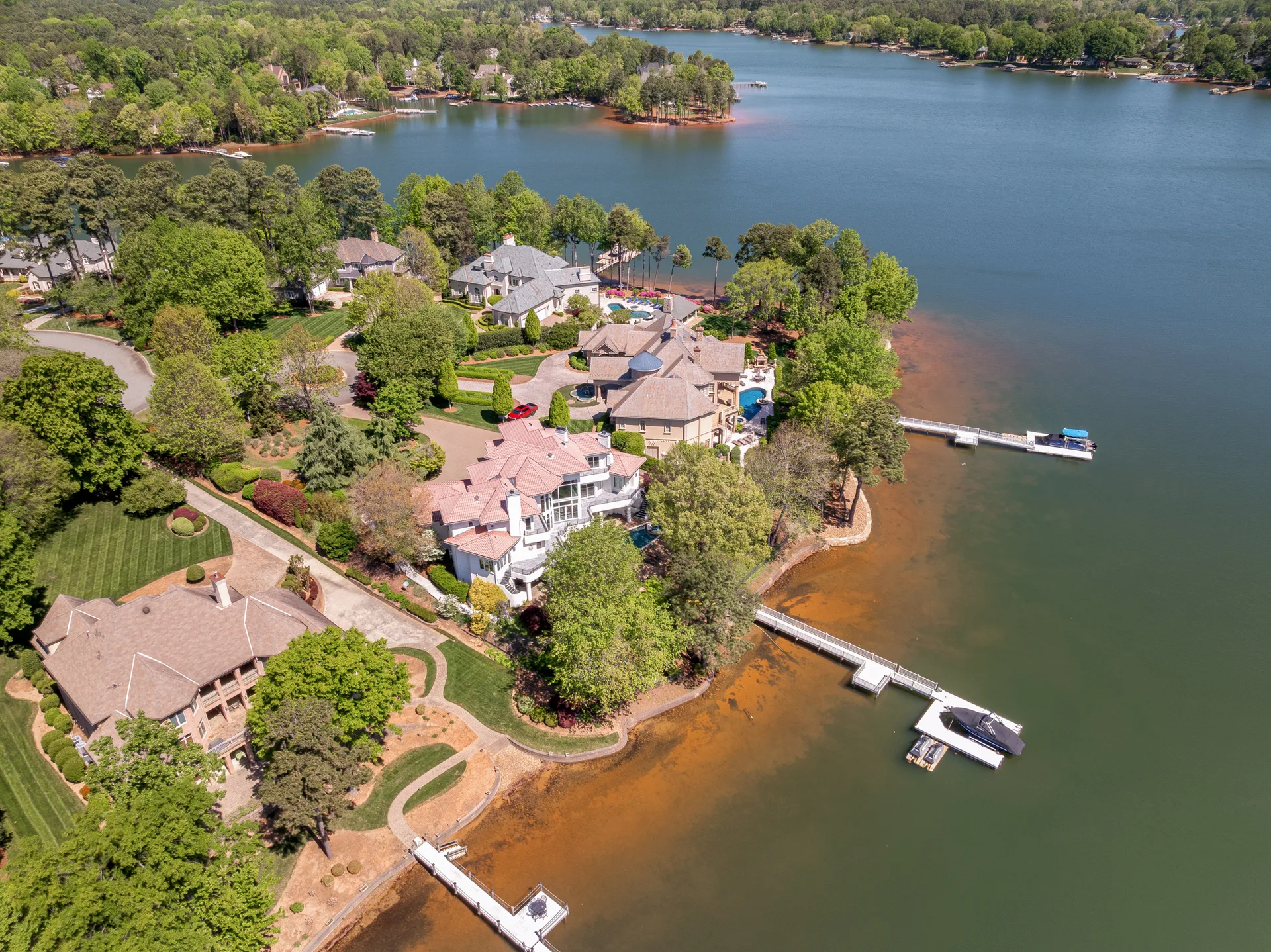
Being in a mapped flood zone is a starting fact, not a verdict on the home. Duke Energy manages Lake Norman as a reservoir and draws it down seasonally, which affects the near-shore, and most lakefront homes are built well above the shoreline even as their docks and boathouses sit within the mapped zone. What determines your actual position is the home's elevation, not just its address on a map.
Elevation and the Elevation Certificate
The Base Flood Elevation on the map is a reference flood level, and an Elevation Certificate documents where the home's lowest floor, utilities, and key equipment sit relative to that level. A home built above the base flood elevation is in a stronger position for both cost and coverage; one below it faces higher cost and stricter construction requirements.
That is why elevation is part of a lake lot's value. A finished walk-out above the waterline, raised utilities, and the careful engineering of the structure all show on the certificate, and they buy peace of mind along with the view.
What to do before you close
Pull the FEMA panel for the address, request the Elevation Certificate if one exists, and ask your insurer for a current flood quote before you commit. Because the federal program caps coverage on the building and contents, buyers of higher-value lakefront homes often pair it with a private flood policy or supplemental coverage.
Ask specifically how the dock, boathouse, and shoreline accessory structures are treated, since they sit in the floodplain by definition. Premiums are set per-property under the federal program's newer rating approach, so the only reliable number is a quote for your exact house from an insurer who writes North Carolina flood coverage, as of your purchase date.
Verify current details
Flood maps, elevations, and insurance programs change. As of November 2026, verify the FEMA zone and obtain a current Elevation Certificate and flood quote for the exact address rather than relying on general figures.
Still have a question?
Ask Vic and Amy directly about the lake, the market, or your next move.