
Ask Vic and Amy · Question 01 of 10
What is deep-water waterfront and how much Lake Norman shoreline do homes really need?
Mooresville and the Lake Norman area · Updated November 2026
The short answer
Deep-water waterfront means the water at your dock stays deep enough to keep a boat at the slip through the lake's normal seasonal range, not just in summer. On Lake Norman there is no single official depth number; what matters is the depth at your dock at the lake's normal low level and whether you can enter and leave without touching bottom. How much shoreline you need depends on your boat, your slip, and how often you will use the water.
The full answer
What deep water actually means on Lake Norman
Lake Norman is a reservoir on the Catawba River, created in the early 1960s when Duke Power dammed the river at Cowans Ford Dam. Because it is an impoundment, depth varies widely across the lake: the deepest water tends to sit in the old river channel and near the dam, while coves and the upper reaches of creek arms run shallower.
Duke Energy manages the reservoir's water level and draws the lake down in the fall and winter for flood control and maintenance. That seasonal change is the reason deep water matters. A dock that floats a boat comfortably in July can go shallow by late winter. In practice, deep water means enough depth at the dock at the lake's normal low level to moor safely and to get the boat in and out.
Because there is no single official depth figure, buyers verify a property with actual soundings and the depth of the slip rather than relying on a label. Sellers and their agents often share depth records, and a dock that sits on open, deep water is easy to confirm in person, especially during the winter drawdown.
How much shoreline does a home really need?
There is no fixed formula. A home with a modest band of frontage on deep, open water can outperform one with a long shoreline that runs into a shallow cove, because what most buyers actually use is the deep slot at the dock and easy access to open water.
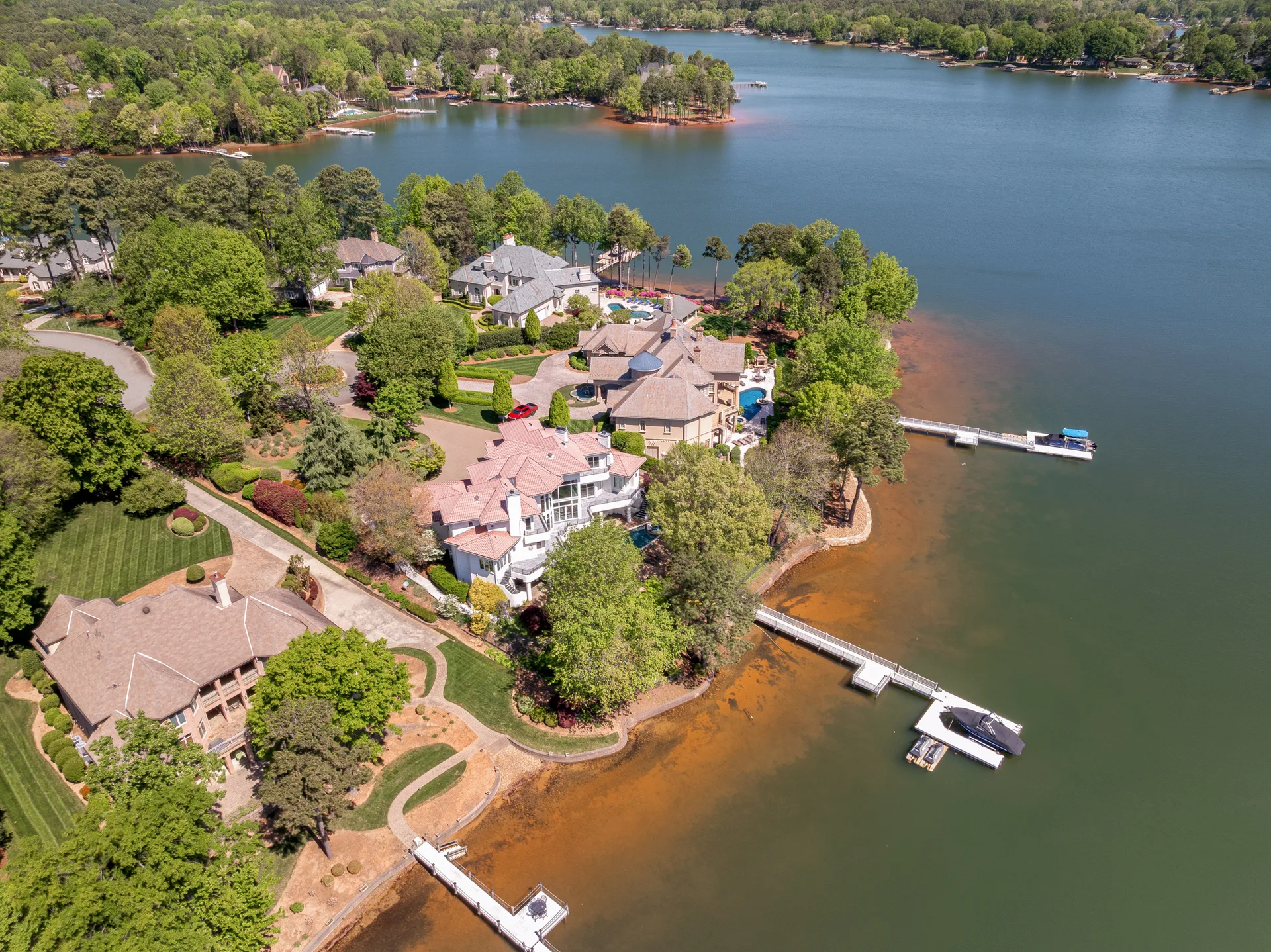
What buyers typically evaluate is frontage width, the depth at the current or proposed dock, the dock's orientation to open water, wind and wave protection, and the condition of the dock, lift, and seawall. A community marina with deep-water slips, like the one in The Point, is a useful backup for boats too large for a private slip.
For a home like 102 Eastham Ct, the private deep-water dock and boat slip are a central feature and some of the first things a serious buyer verifies. Walk the property during the drawdown season, ask for depth records, and confirm what the permitted dock actually allows.
How to verify depth before you commit
Ask for the current depth soundings at the dock and the lift, review the dock permit on record, and look at the property in person when the lake is at a lower level. If you cannot be there in season, ask your advisor to video the water and the dock so you can see the true depth profile.
Lake conditions shown on a listing are accurate as of the date they were recorded. As of November 2026, the lake's normal seasonal management by Duke Energy remains the defining factor for dock depth, and the reliable way to confirm a property is a current survey of the slip and a review of its permit.
Verify current details
Permit rules and lake-level management are set by Duke Energy and can change. Verify current conditions and shoreline requirements for any specific property with Duke Energy and your advisor before you commit.
Still have a question?
Ask Vic and Amy directly about the lake, the market, or your next move.